Epoxy Flooring in Hammond, IN, Built on a Tested Slab

Ground concrete, a moisture reading in writing and a proposal that names the product, coat count and finished thickness before any work starts.

Hammond Epoxy Flooring has more than 20 years of experience on concrete, installing epoxy flooring in Hammond, IN for garages, basements, shops, plants and commercial kitchens. We grind the slab, test it for moisture and repair it before any coating goes down, and every proposal names the product line, the number of coats and the finished thickness you are paying for.

Our work covers epoxy garage floors, polyaspartic floor coatings, flake and metallic epoxy floors, basement floor epoxy, polished concrete, concrete grinding and floor repair, plus commercial, industrial, ESD and commercial kitchen flooring. A homeowner coating a two-car garage and a plant manager phasing a production floor get the same written scope: what the slab measured, what will be fixed, and what the finished floor should look and perform like.

The point of all of that paperwork is simple. A coating is only as good as the concrete under it, and most coating failures trace back to a slab that was never opened properly, never tested for moisture, or never repaired before it was covered.

Get Your Free Quote

Fast response • No obligation

So we can reach you about your request.

So we can send you a confirmation after you submit this inquiry form.

  • 20+ Years on Concrete
  • Moisture Test in Every Scope
  • Free Written Estimates

What we do

Our Services

Epoxy flooring and concrete coatings for Hammond, IN homes and plants

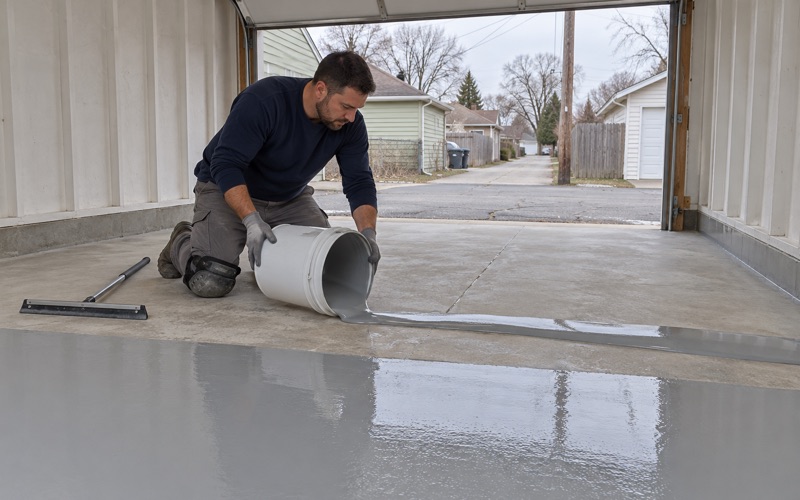
Mixed epoxy poured in a ribbon onto a ground garage slab behind a Hammond, Indiana frame house, ready to be spread.

Epoxy Garage Floor

A ground, moisture-tested garage slab finished with a built-up epoxy and topcoat system made for winter salt and hot tires.

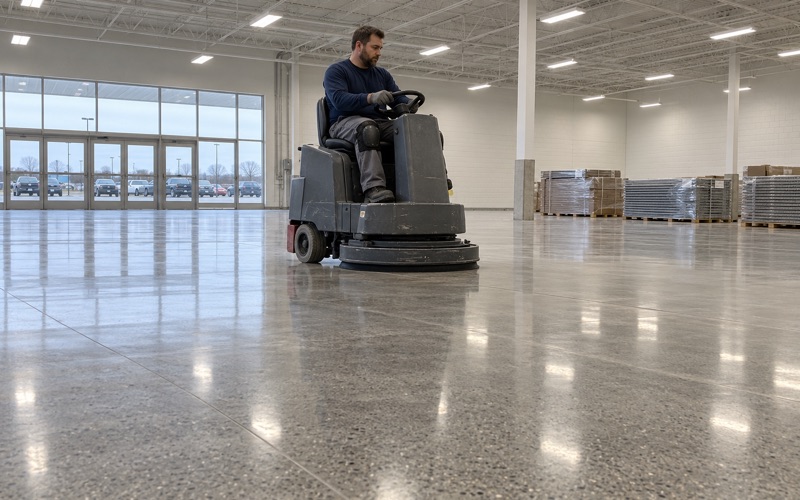
A ride-on burnisher bringing up the shine on a polished concrete floor in a large new retail store in Hammond, Indiana.

Polished Concrete Floors

Diamond-ground, densified and polished concrete for warehouses, showrooms, offices and basements, with a test grind first.

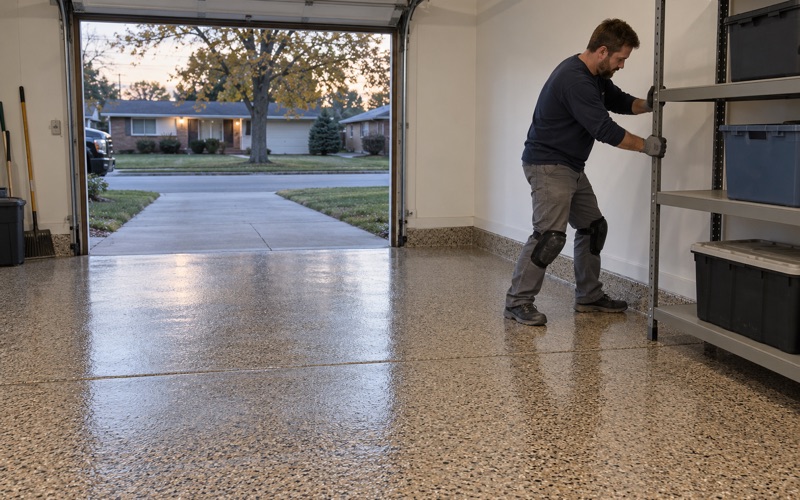
A shelf unit slid back against the wall the same day a polyaspartic flake floor was finished in a Hammond, Indiana garage.

Polyaspartic Floor Coating

Fast-curing, UV-stable polyaspartic coatings for garages, shops and commercial floors, installed over a ground and tested slab.

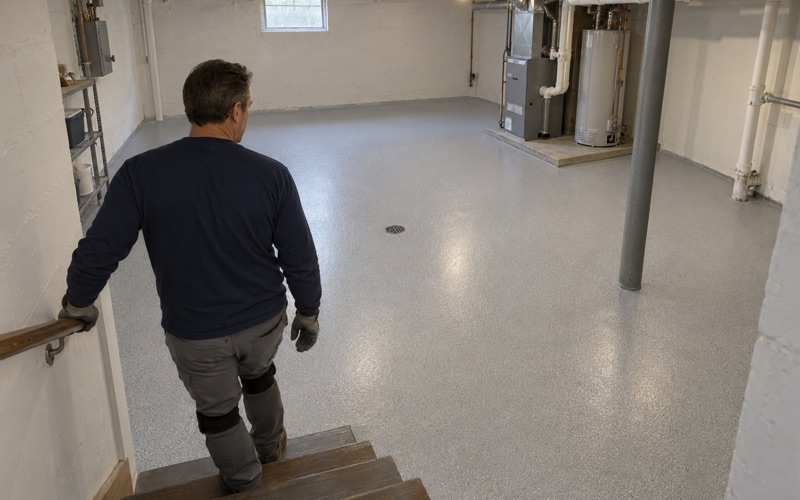
A finished quartz-broadcast epoxy floor seen from the stair of an older Hammond, Indiana basement, carried to the rim of the floor drain.

Basement Floor Epoxy

Basement floor coatings that start with a moisture test, a ground slab and honest advice about sewers, sumps and water.

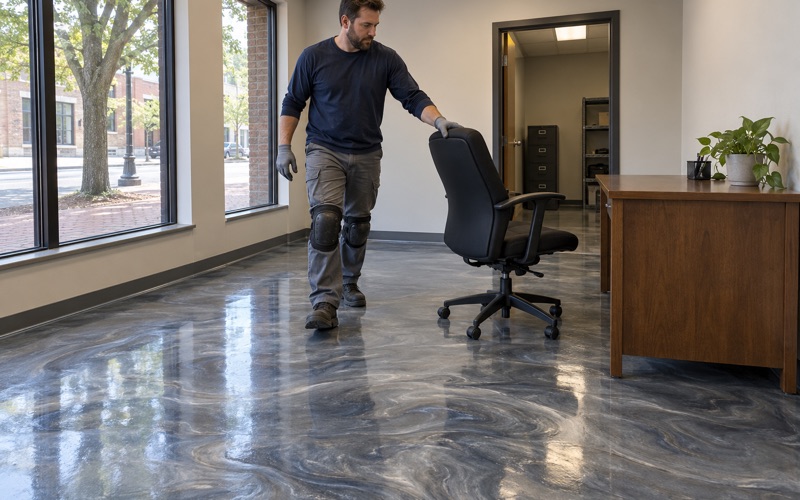
A finished pewter and blue metallic epoxy floor in a small Hammond, Indiana storefront office, an office chair rolled back into place.

Metallic Epoxy Floor

Marbled metallic epoxy floors for showrooms, lobbies, basements and garages, laid by hand over a flat, ground and tested slab.

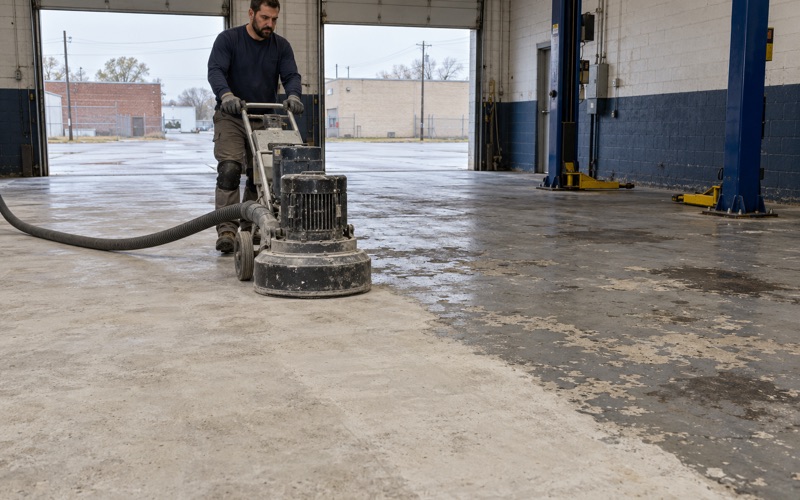
A walk-behind grinder with a dust shroud cutting through old floor paint in a Hammond, Indiana auto repair garage.

Concrete Grinding

Diamond grinding and shot blasting that remove old coatings and open concrete to the profile a floor coating needs.

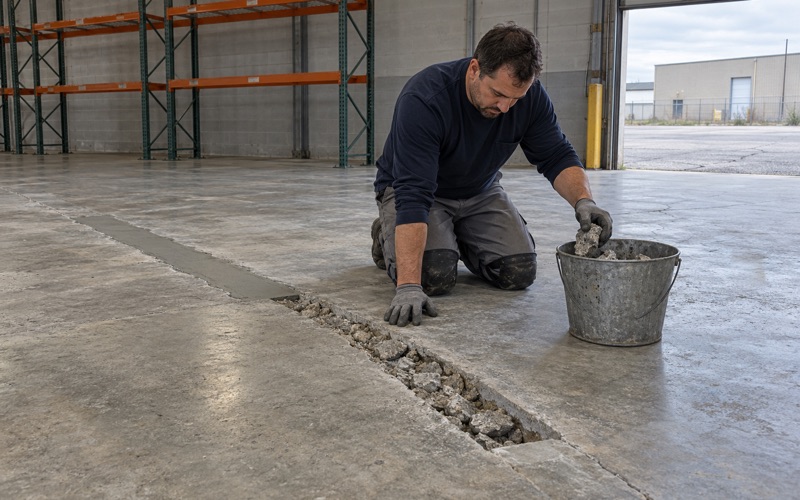
Loose, delaminated concrete being lifted out of a spalled joint edge on a Hammond, Indiana warehouse floor before it is rebuilt.

Concrete Floor Repair

Crack, spall, joint and salt-damage repair for garage, basement and commercial slabs, done right before any coating goes on.

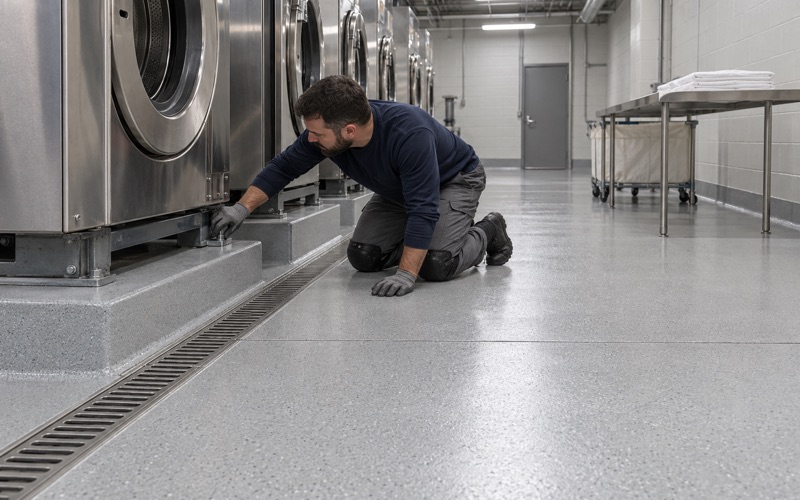
A coated, coved processing floor in a medical laundry in Hammond, Indiana, beside a washer on its raised equipment pad.

Commercial Epoxy Flooring

Seamless commercial floors for retail, offices, service shops, schools and back-of-house, phased around business hours.

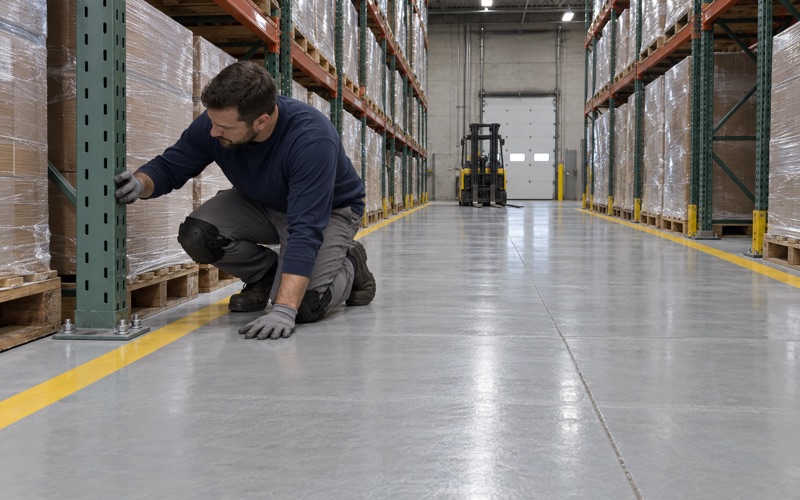
A coated warehouse aisle in a Hammond, Indiana industrial park, the coating meeting steel rack uprights at their base plates.

Industrial Epoxy Flooring

Heavy-duty floor systems for plants, warehouses and rail and truck shops, built for wheel loads, chemicals and shift schedules.

A static-dissipative floor in an electronics assembly room inside a Hammond, Indiana industrial building.

ESD Flooring

Static-dissipative and conductive epoxy floors for electronics work, labs, server and control rooms, grounded and tested.

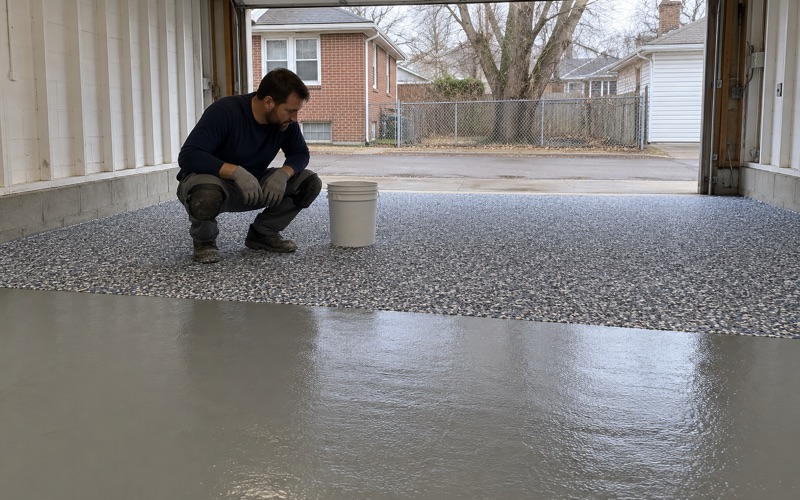
A worker crouching to check a freshly broadcast gray and blue flake floor in a detached garage behind a Hammond, Indiana brick bungalow.

Flake Epoxy Floor

Full-broadcast vinyl flake floors that hide wear, add grip and stand up to salt season, sealed with a UV-stable topcoat.

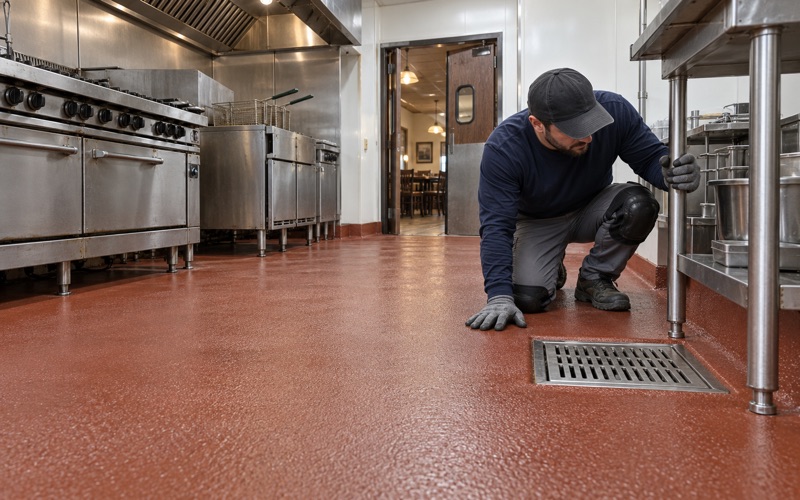
A textured urethane cement kitchen floor in a Hammond, Indiana restaurant, coved at the walls and carried into a floor sink.

Commercial Kitchen Flooring

Seamless urethane cement kitchen floors with integral cove bases, built for hot water, grease and daily health-code cleaning.

Why Hammond Homeowners and Plants Trust Our Concrete Coatings

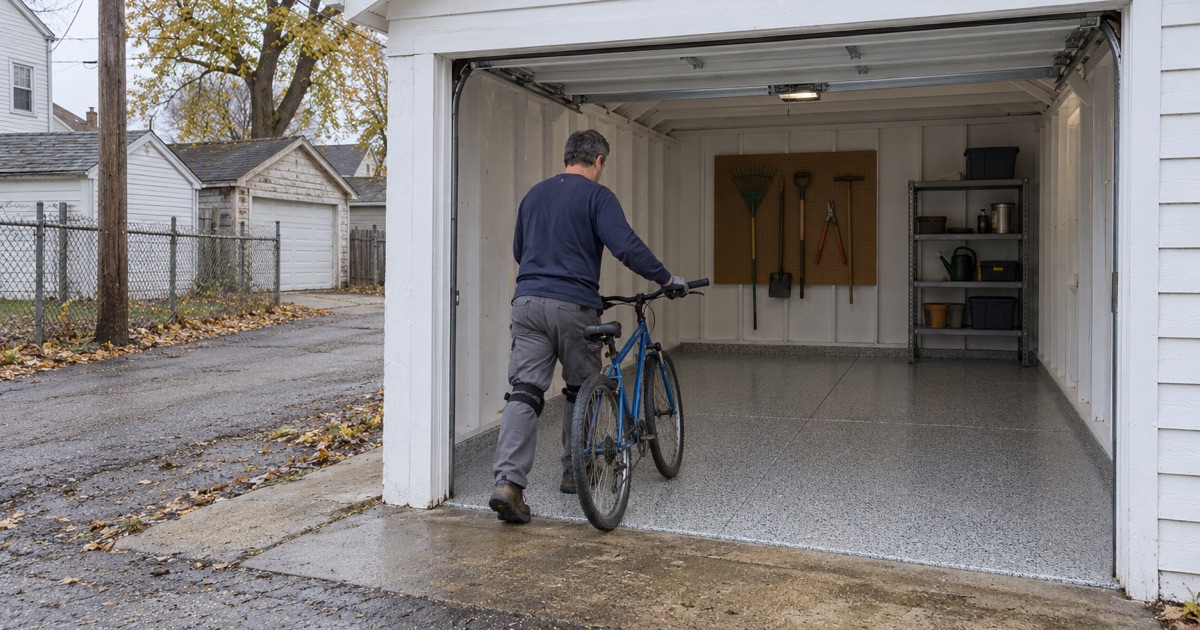
A bicycle wheeled back onto a finished gray flake floor in a detached alley garage behind a 1940s frame house in Hammond, Indiana.

20+ Years on Concrete Floors

We have worked on concrete for more than two decades, long enough to have seen what happens to floors that were rushed. That history is why the steps in our scope come in the order they do: open the slab, test it, repair it, then coat it.

Why Choose Hammond Epoxy Flooring

Ground, Never Acid Etched

Every slab we coat is opened by diamond grinding or shot blasting to a measured concrete surface profile, so the epoxy bonds to clean, sound concrete rather than to the weak, residue-coated surface an acid etch leaves behind, which is where cheap garage coatings start peeling.

Moisture Tested Before the Price

No proposal is final until the slab has been tested, and the proposal names the ASTM test used and the reading the floor must meet. Hammond basements sit over sandy, high-water ground, so this catches vapor drive before it blisters a new coating rather than after the check has cleared.

A Spec You Can Check

Each proposal lists the product line, the coat count and the finished thickness, so the floor installed in your garage can be measured against what you bought rather than against a vague promise of an industrial-grade coating.

Hammond and Lake County Paperwork

Hammond requires every contractor working in the city to register, with a $5,000 bond recorded at the Lake County Recorder in Crown Point. We check that and each ring town’s own rules before booking, and home jobs get the written contract Indiana’s Home Improvement Contracts Act requires, signed before any grinding.

Built for Brine and Salt Season

Garage systems are chosen to stand up to the brine and rock salt tires drag in from December to March, so the topcoat resists the chloride and abrasion of a Lake County winter rather than dulling and wearing through by the second spring.

Garage Floors in Hammond, Start to Finish

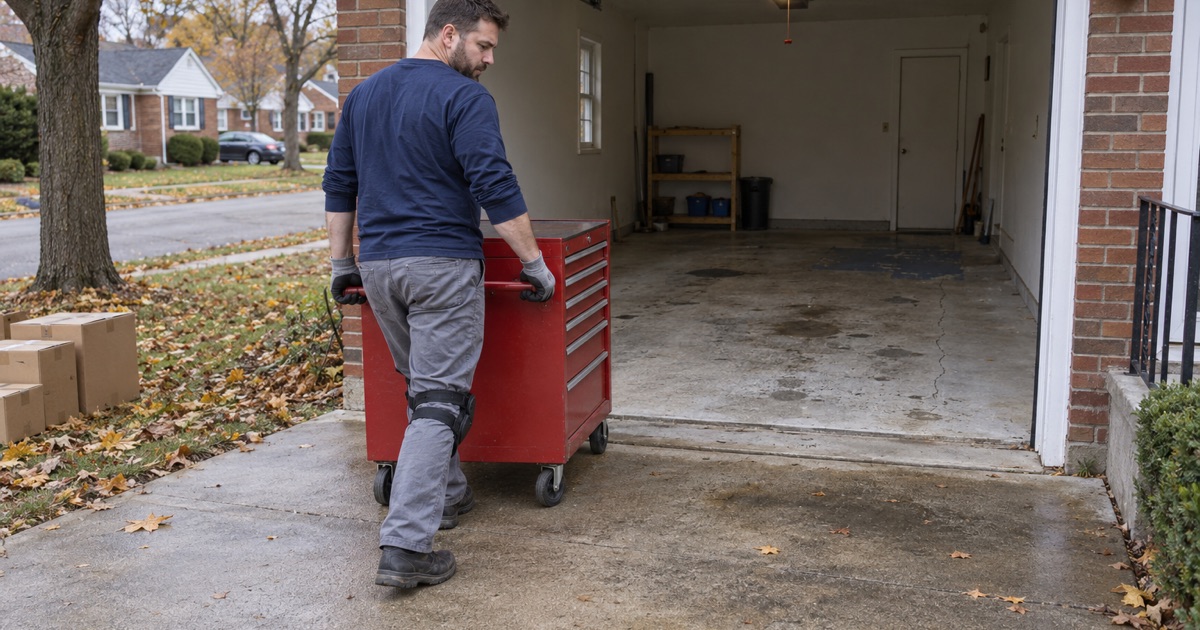
A rolling tool chest wheeled out of a Hammond garage onto the driveway so the old stained slab can be cleared for coating.

How an Epoxy Garage Floor Job Runs

A garage floor job starts with a walk of the slab: cracks, spalls, old paint and patches are mapped and a moisture test is set. On install day the floor is ground, vacuumed and repaired, then the base coat, broadcast and topcoat go down in the order the proposal lists. You get dates in writing for foot traffic and for parking the first car.

Attached Garages and the House Next Door

An attached garage shares a wall and a door with living space, so dust and odor control matter. We grind with vacuums at the machine, seal the house door during work and choose low-odor products where the system allows, which keeps grinding dust and solvent smell out of the kitchen rather than tracked through it.

Detached Garages Through a Lake Michigan Winter

Many Hammond detached garages are never heated, and the slab sits near freezing for months. The NOAA 1991-2020 normals at nearby Chicago Midway count about 106 days a year with a low at or below freezing. We pick systems that tolerate that cycle and schedule installs for weather the coating can actually cure in.

Moisture Testing a Garage Slab

Building codes allow a garage slab to be poured without the vapor retarder required under a heated slab; the IRC R506.2.3 exception covers garages and unheated accessory structures. That means a garage can pass vapor up into a coating even when the house slab beside it is protected, so we test the garage on its own rather than assume.

Pitting, Spalls and Cracks in an Older Garage Floor

With most of Hammond’s housing built before 1980, garage slabs often arrive pitted, spalled or cracked. Surface damage is ground, filled and patched before coating. A slab that is heaved, badly settled or still moving gets an honest call that replacement beats coating, because resin bridges no structural movement.

Brine and Rock Salt on Bare Concrete

Calcium chloride and rock salt carried in on tires soak into bare concrete, and repeated freeze and thaw with salt in the pores scales and pits the surface. One winter can leave a new slab rough at the parking spots. A coating keeps the salt water on top where a squeegee can clear it.

Cold Weather Limits for Epoxy

Epoxy cures by chemical reaction, and a cold slab slows it badly or leaves it soft and blushed. We read slab temperature and dew point before a coat goes down, and if an unheated garage cannot hold a safe margin through the cure, we book it for spring rather than coat it anyway.

Hot Tire Pickup

A tire coming in off a summer drive is hot and soft, and when it cools on a thin or under-cured coating it can grip the film and pull it off the slab. Building enough thickness, bonding to a ground profile and using a topcoat rated for tire traffic stops the lifting that bargain one-coat kits are known for.

Store-Bought Epoxy Kits Compared With a Ground Floor

Big-box kits are water-based or thinned coatings applied over an acid-etched slab, often at a few mils thick. A professional floor is a ground slab, a 100% solids or high-build base, a broadcast and a protective topcoat. The kit costs less on day one and usually costs more by the time it is stripped and redone.

Garage Floor Epoxy Cost

Published ranges for concrete coatings around south Chicagoland run roughly $3 to $15 per square foot. What moves a floor within that range is crack and spall repair, removal of old coatings, moisture mitigation, the system chosen and the size of the slab. We price after the slab is mapped, so the number holds.

What a Coating Warranty Leaves Out

Most coating warranties exclude damage from moisture vapor or hydrostatic pressure coming through the slab, along with slab movement and impact. We read those exclusions to you before you sign, starting with moisture, so you know exactly what the warranty covers and why the moisture test comes first.

Basements, Wet Ground and Older Slabs

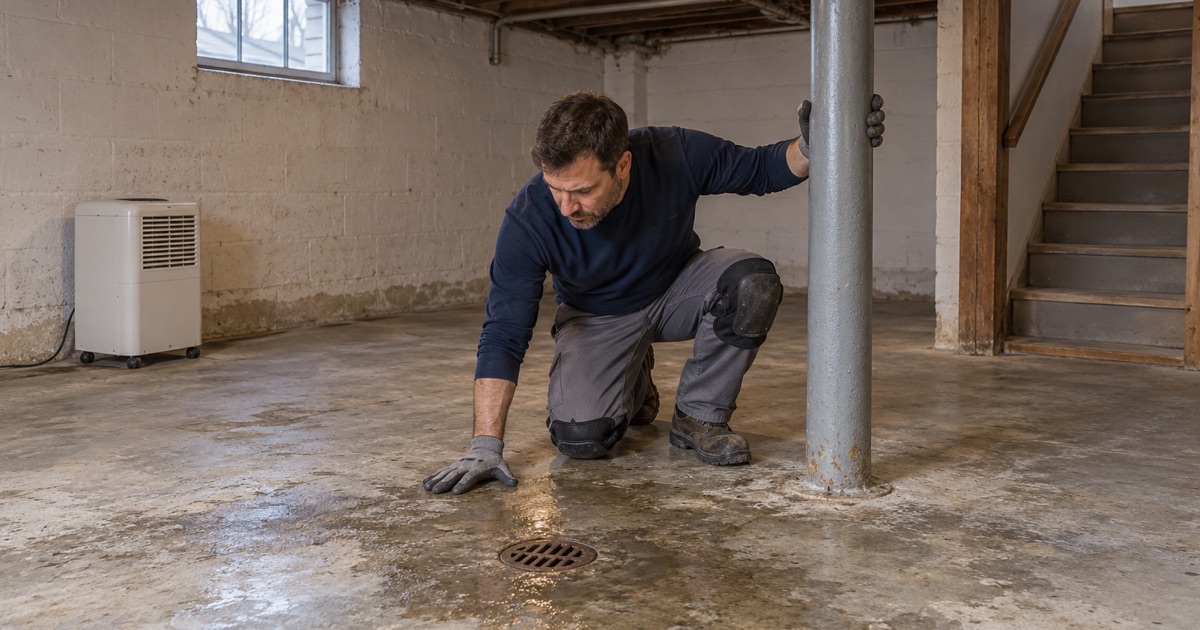
An older Hammond basement slab being read before any coating, a worker kneeling at the floor drain beside the steel support column.

Basement Floor Epoxy and the Moisture Question

A basement slab sits against soil on its underside, so moisture vapor moves up through it constantly. Before any basement floor epoxy, we test the slab and read the result against what the coating can tolerate. A slab that passes gets a standard system; one that does not gets a mitigation primer or a different plan.

Sand, Muck and Slag Fill Under Hammond

North Lake County is largely sandy lake plain, with muck in old low ground and steel-mill slag fill in parts of north Hammond. Slag can expand as it hydrates and has been known to lift floor slabs. We read cracks for signs of fresh movement before coating, because a slab still being pushed up will crack through any coating.

Sump Basins and Floor Drains

A coating has to stop cleanly at a sump basin lid and slope correctly to a floor drain. We keep the coating clear of the sump opening so the pit can be serviced, terminate it at the drain body and hold the existing pitch, so water still runs where it should rather than ponding on a new floor.

Coating After a Sewer Backup or River Flood

Hammond basements have flooded from sewer backups, with 74 confirmed after the July 5, 2023 storms and at least 200 homes reported after an August 2025 storm. A floor that has taken sewage needs cleanup, disinfection and a full drying period before testing, and we coat only after the slab reads dry.

Backflow Valves and Sump Pumps Come First

A new floor coating does nothing to stop sewer water coming up a floor drain. A backflow valve installed by a licensed plumber and a working sump pump are what keep water out, and the Hammond Sanitary District has offered homeowners a reimbursement toward backflow valves. We recommend sorting those out before coating.

Efflorescence on a Basement Floor

White, chalky powder on a basement floor is efflorescence: salts carried to the surface by water moving through the concrete. It tells you moisture is moving, and it will push a coating off from below if it is simply painted over. We remove it, test the slab and treat the moisture before coating.

Moisture-Mitigation Primers

When a slab tests above what a standard coating tolerates, a moisture-mitigation primer can be applied first to hold back vapor emission within its rated limit. It adds cost and is not a cure for liquid water or hydrostatic pressure, so we use it where the reading supports it and tell you plainly where it will not.

Old Paint and Patching on Older Concrete

Many Hammond basements carry decades of paint, mastic and patching, and a new coating bonds no better than the weakest layer underneath. We grind down to sound concrete, remove failed patches and rebuild them with repair material compatible with the coating, so nothing old is trapped under the new floor.

Laundry Rooms, Workshops and Home Gyms

A coated basement floor cleans easily under a washer, a workbench or a weight rack. For a workshop we favor a harder topcoat and a broadcast for grip, and for a home gym we plan around rubber mats and dropped weights. Each room gets a build matched to how it will be used.

Coatings Are Not Radon Mitigation or Waterproofing

Lake County, Indiana is in EPA radon Zone 2, and radon reduction is work for a licensed mitigator, not a floor coater. A floor coating also does not waterproof a basement against leaks or hydrostatic pressure. We will never sell a coating as either, and we tell you who to call instead.

Flake, Metallic and Polished Finishes

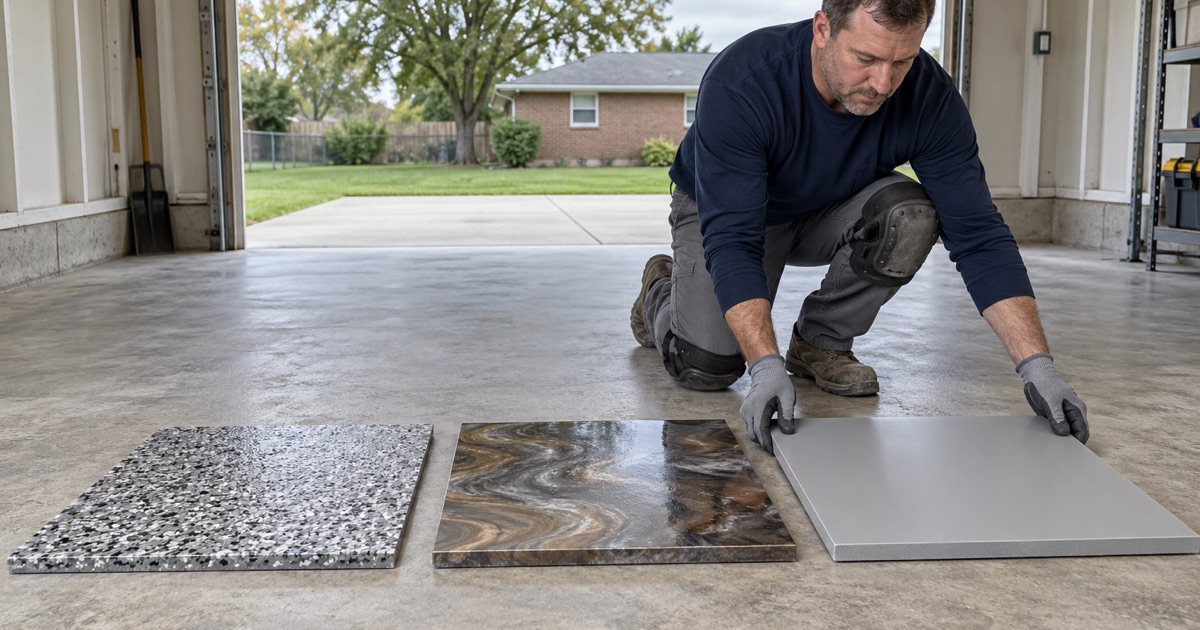
Three finish samples laid side by side on a ground garage slab in Hammond — a gray flake board, a bronze metallic board and a solid gray board.

Vinyl Flake Epoxy Floors

A flake floor is an epoxy base with vinyl chips broadcast into it, then sealed with a clear topcoat. Blend and chip size change the look: a fine chip reads as a tight speckle, a larger chip as a bolder pattern. A full broadcast to rejection also hides small slab flaws and adds texture underfoot.

Metallic Epoxy Floors

Metallic epoxy uses pigment that is worked while wet to create a marbled, flowing look. It takes a flat, well-prepared slab, controlled working time and an installer who manipulates the pigment by hand, because every flaw in the slab and every stall in the work shows through in the finish.

Polished Concrete and Exposed Aggregate

Polished concrete is the slab itself, ground through progressively finer diamonds and hardened with a lithium silicate densifier. A light grind leaves a cream finish, a deeper grind exposes salt-and-pepper or full aggregate. We test-grind a small area first, so you see what your slab will reveal before committing to a look.

Gloss, Satin or Matte Topcoats

High gloss looks sharp but shows dust, scratches and tire marks the soonest. Satin and matte topcoats hide everyday wear far better and can make a busy garage look clean between sweeps. We help you match the sheen to how the floor will be used rather than to a showroom photograph.

Quartz Broadcast Floors

A quartz floor broadcasts colored quartz aggregate into the resin, adding color and grip in one pass. It holds up well where wet traffic is constant, which is why it suits mudrooms, locker rooms and commercial washrooms. The aggregate size and the topcoat build set how textured the floor feels.

Solid Color Floor Coatings

A solid color epoxy is the simplest system and often the right one for a utility room, a storage floor or a shop where safety striping will go on top. It costs less than a decorative broadcast and is easy to touch up later, with grip added by a fine anti-slip additive.

Sunlight, UV Exposure and Ambering

Standard epoxy yellows, or ambers, under ultraviolet light, which shows quickly near a garage door left open or beside a sunny window. A polyaspartic or aliphatic polyurethane topcoat holds its color in sunlight, so we use one wherever the floor will see daylight.

Saw-Cut Lines, Borders and Logos

Control joints can be honored as clean lines or filled and coated over, and a border or a contrasting band can frame a room. Logos are laid in for shops and showrooms. We plan these details with the layout before work starts, because they are hard to add once the floor is down.

Plants, Rail Shops, Kitchens and Back-of-House

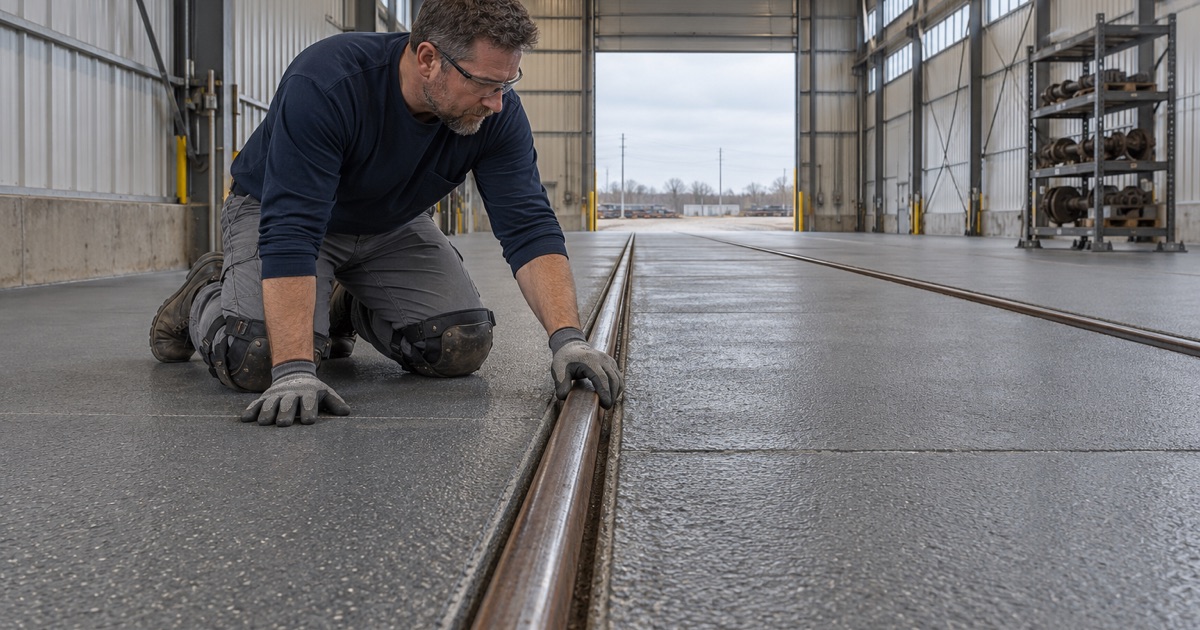
A heavy-duty coating ending cleanly against the embedded rails of a rail-car repair shop floor in Hammond, Indiana.

Commercial and Industrial Floor Jobs

A commercial or industrial floor job adds scheduling, shutdown planning and heavier systems to everything a home job requires. We meet with the facility team, map traffic and chemical exposure, phase the work and write the scope around what the operation can close and for how long, so the floor is not designed in isolation.

Food and Consumer-Goods Plant Floors

Hammond is home to large food and consumer-goods plants, including Unilever’s soap plant and Cargill’s starch operation. Floors washed down every shift face hot water, cleaners and thermal shock. We specify systems rated for that exposure, slope to drains, and use urethane cement where an epoxy would soften.

Warehouse and Distribution Floors

Forklift and pallet jack wheels grind at a floor and impact it at every dock door and turn. A warehouse floor needs a high-build epoxy or a densified polish chosen for wheel loads, plus repaired joints so wheels do not chip the edges. We map the heaviest traffic lanes and build the system for them.

Rail, Fleet and Truck Shops

The Indiana Harbor Belt Railroad and the trucking that serves the region keep fleet shops busy. Shop floors take hot tires, oil and coolant drips and winter brine. We use chemical-resistant topcoats, broadcasts for grip and repair joints first, so the floor holds up to heavy equipment rather than peeling in the bays.

Safety Striping and Marked Aisles

Aisle lines, pedestrian walkways and equipment zones can be laid into the coating rather than painted on top, so they wear at the same rate as the floor. We lay out striping with the facility team to match the plant’s traffic plan and safety program before the topcoat goes down.

Casino and Hotel Back-of-House Floors

Horseshoe Hammond is one of the city’s largest employers, and back-of-house corridors, kitchens and loading areas at casinos and hotels run around the clock. We phase that work in sections, overnight or across a weekend, using fast-cure systems so each zone returns to service on schedule.

Restaurant and Bakery Kitchen Floors

The FDA Food Code calls for floors that are smooth, durable and easily cleanable, with coved junctures where the floor meets the wall under section 6-201.13. We install a seamless resin floor with an integral cove base, so grease and water cannot collect in the corner a health inspector checks first.

Urethane Cement Where Epoxy Would Soften

Hot water, steam cleaning, fats and harsh sanitizers can soften a standard epoxy over time. Urethane cement is built for that exposure and tolerates thermal shock, which makes it the usual choice for commercial kitchens and wash-down production rooms. We name it in the proposal where the conditions call for it.

University and Public Building Floors

Purdue University Northwest’s Hammond campus and other public buildings see heavy foot traffic and constant cleaning. Floors there need a durable topcoat, slip resistance in entries and a finish that takes daily scrubbing. We schedule around class and office hours and phase work so buildings stay open.

VOC Limits on Floor and Industrial Coatings

Hammond sits in North Township, part of the Chicago 2015 ozone nonattainment area, and Indiana’s 326 IAC 8-14 sets a 250 g/L limit for floor coatings. Illinois sets its own limits in Part 223 of Title 35 of its Administrative Code. Those limits bind the applicator, so we choose compliant products for every job.

Night and Weekend Work for Businesses That Stay Open

When a business cannot close, we work overnight or on weekends and phase the floor in zones. Fast-cure systems let a section return to service the next morning. The schedule is written into the proposal so the operation knows exactly which areas are closed and when.

Areas We Serve

Hammond Epoxy Flooring provides epoxy-flooring throughout the greater Hammond area, with the same crews and the same standards on every job.

Good to know

Frequently Asked Questions

How much does epoxy flooring cost in Hammond?

Published ranges for concrete coatings around south Chicagoland run roughly $3 to $15 per square foot, and many installers set a minimum job size. Where a floor lands in that range depends on how much repair the slab needs, whether moisture mitigation is required, the system chosen and the square footage. We price after the slab is mapped and tested, so the number on the proposal covers the floor you actually have.

How long does a garage floor coating take from start to finish?

Most two-car garages are ground, repaired and coated over one to two working days, depending on the system and the condition of the slab. Walking and driving times then follow the product's cure schedule at the slab temperature on the day, which is why we give you the dates for foot traffic and for parking in writing rather than a single promise.

Do you acid etch the concrete before coating it?

No. Acid etching leaves an uneven, unmeasured surface and residue that can hurt the bond. We open every slab with diamond grinding or shot blasting to a concrete surface profile matched to the coating, then vacuum the dust at the machine so nothing is washed toward a floor drain.

Which moisture tests do you use?

Depending on the slab, we use the ASTM D4263 plastic sheet test as a first screen, the ASTM F1869 calcium chloride test for vapor emission rate, or ASTM F2170 relative humidity probes set into the slab. The proposal names which test applies and the reading the floor must meet before the coating goes down.

Is a contractor license required for floor coating work in Hammond?

Hammond requires every contractor, subcontractor and specialty contractor working inside the city limits to register with the city, and its contractor license carries a $5,000 bond recorded with the Lake County Recorder in Crown Point plus proof of liability insurance. Ring towns in Lake County and in Illinois each set their own rules, so we check them before booking a job outside Hammond.

What is the difference between epoxy and polyaspartic?

Epoxy is a slower-curing, high-build resin that bonds well and builds thickness, while polyaspartic is an aliphatic coating that cures fast and holds its color under sunlight. Many garage systems use both: an epoxy base for bond and build, and a polyaspartic topcoat for wear and UV stability. The proposal names which layer is which.

Will a coated floor be slippery when it is wet?

A smooth, high-gloss coating can be slick under water, slush or oil. Grip comes from what is broadcast into the floor and the topcoat over it, such as a full vinyl flake or quartz broadcast or a fine anti-slip additive, so we name that build in the proposal rather than promising a non-slip floor.

What does the warranty on a floor coating not cover?

Most coating warranties exclude failures caused by moisture vapor or hydrostatic pressure coming up through the slab, along with slab movement, impact damage and chemical exposure outside the product's ratings. We read those exclusions out before a job is sold, starting with moisture, because it is the one most often left out of the conversation.

Can you coat a floor in winter?

Yes, when the slab is warm enough and stays safely above the dew point through the cure. A heated garage or a heated building can be coated through the winter. A cold, unheated detached garage usually cannot, and we will tell you to wait for spring rather than lay a coating that cures badly.

Do you work in Illinois as well as Indiana?

Yes. We serve Hammond and its neighbors on both sides of the state line. Illinois home jobs follow the Illinois Home Repair and Remodeling Act and Indiana home jobs follow the Indiana Home Improvement Contracts Act, and each village's license, bond and insurance requirements are checked before the work is scheduled.

Ready to Get Started?

Request a free quote today and we'll get back to you fast.